After months of preparation, the Ocean Sciences Meeting 2026 — one of the largest gatherings of ocean scientists worldwide, bringing together nearly 6,000 participants from around 60 countries — was finally held in Glasgow, Scotland (UK), convening researchers, stakeholders and representatives from across the multidisciplinary ocean science community.
CHASE lead Catarina V. Guerreiro (MARE–ARNET & IDL/Ciências ULisboa) attended the meeting to present the SOLAS Discovery Science 3.0 framework during the SOLAS Town Hall, co-convene a scientific session on aerosol deposition in the ocean together with international colleagues, and present a cross-hemispheric perspective of dust impacts on calcifying phytoplankton living in the Atlantic Ocean. Together, these contributions reflect the increasingly integrative direction of aerosol–ocean research: from strategic vision to mechanistic understanding across hemispheres.
Contributing to SOLAS Discovery Science 3.0
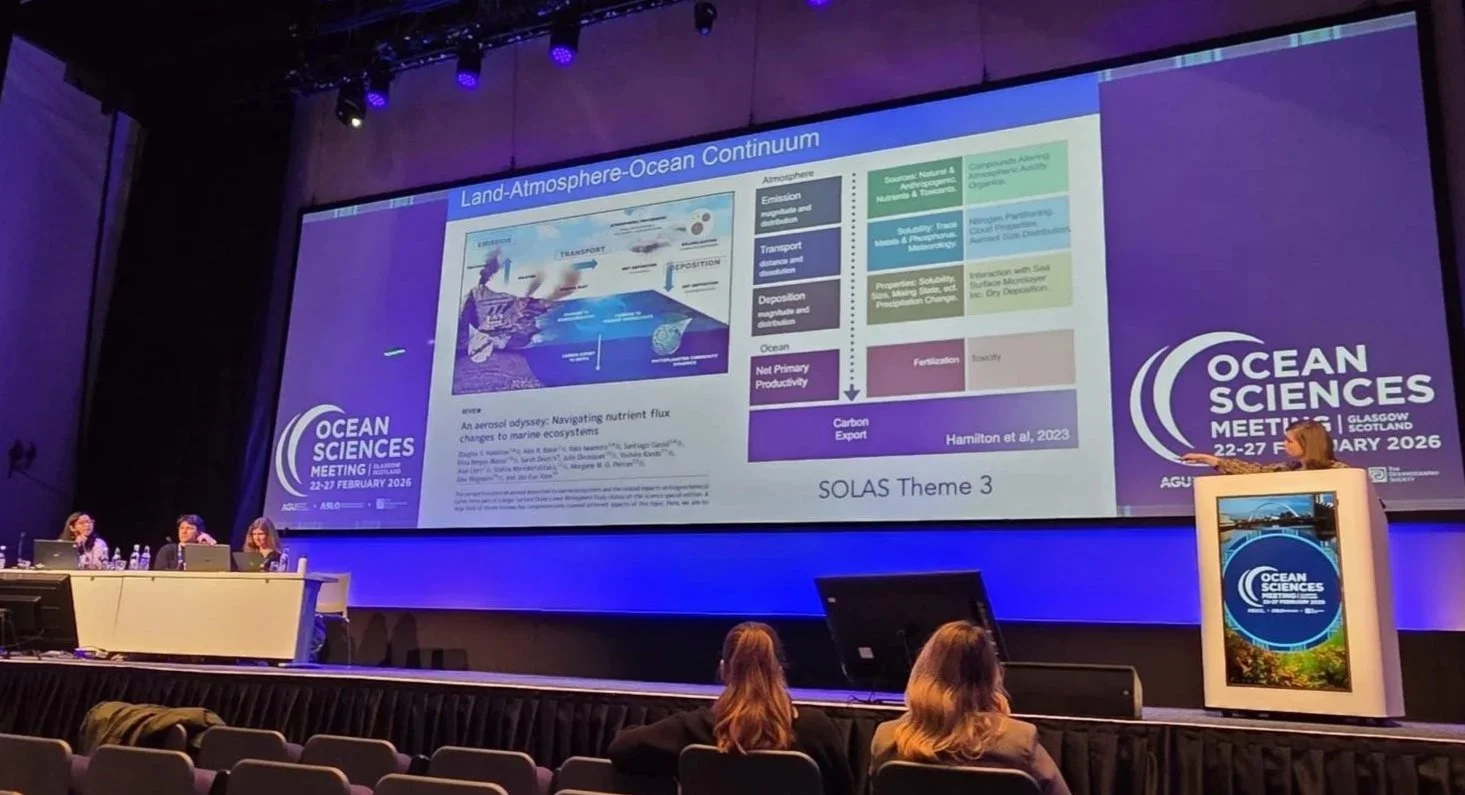
A central moment of the week was the SOLAS Town Hall, where the new SOLAS Science Plan 3.0 was presented and discussed, including its Discovery Science framework co-coordinated by Catarina V. Guerreiro, Nadja Steiner and Santiago Gassó in the course of the past two years. SOLAS Discovery Science 3.0 places air–sea feedbacks at the centre of predictive Earth system science, emphasising:
Rapid Earth system change
Increasing compound extremes (e.g. marine heatwaves, acidification, aerosol events)
The need for quantitative, integrated, process-based understanding
Rather than studying greenhouse gases, aerosols, ocean biogeochemistry or climate variability in isolation, the framework promotes a fully coupled-system perspective. The air–sea interface is treated not as a boundary, but as a dynamic exchange zone where atmospheric forcing, ocean structure and biological responses interact. The discussion in Glasgow highlighted how strongly this integrated perspective resonates across communities. For CHASE, whose core objective is to understand how dust deposition influences marine ecosystems and carbon cycling, this strategic direction provides both validation and momentum.
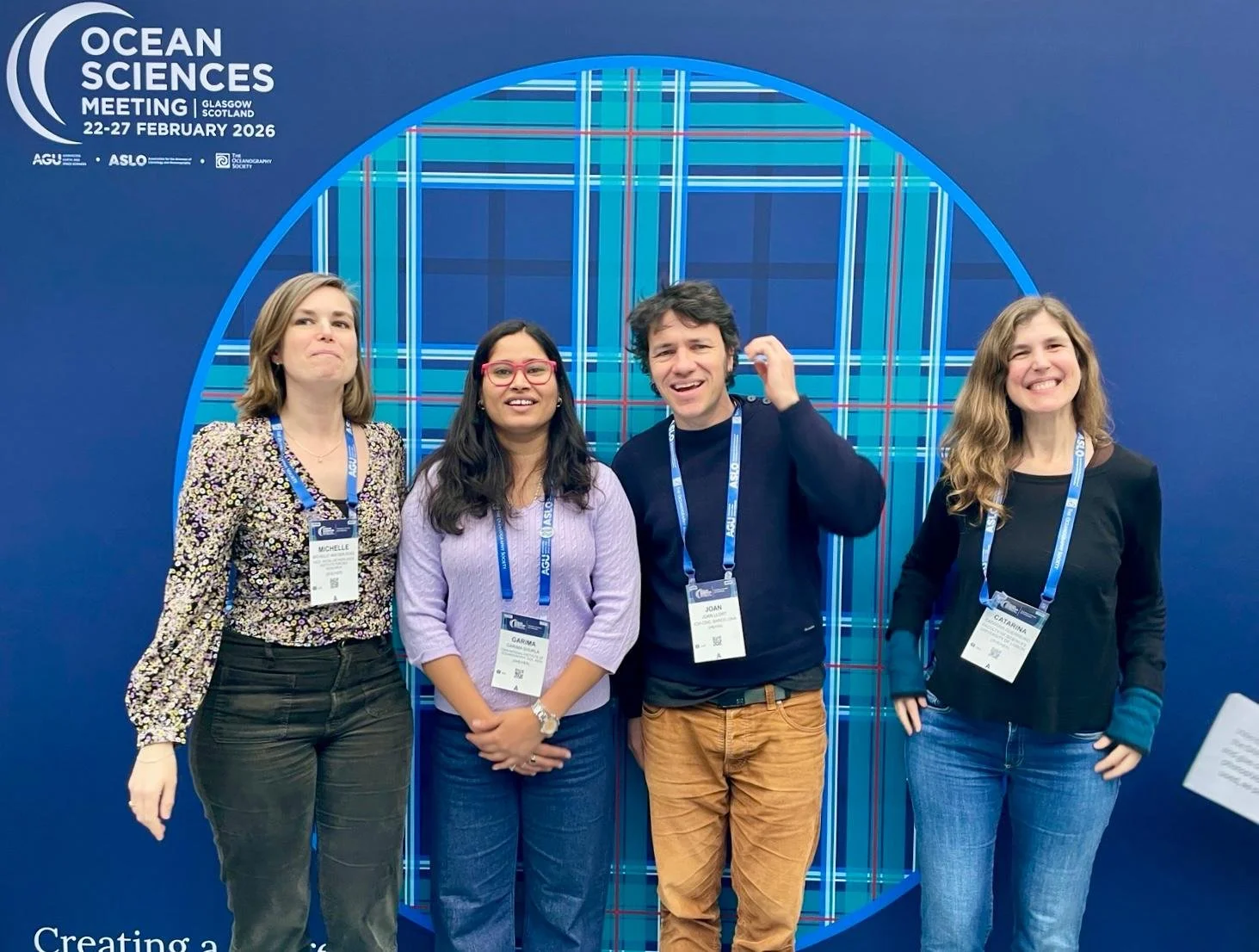
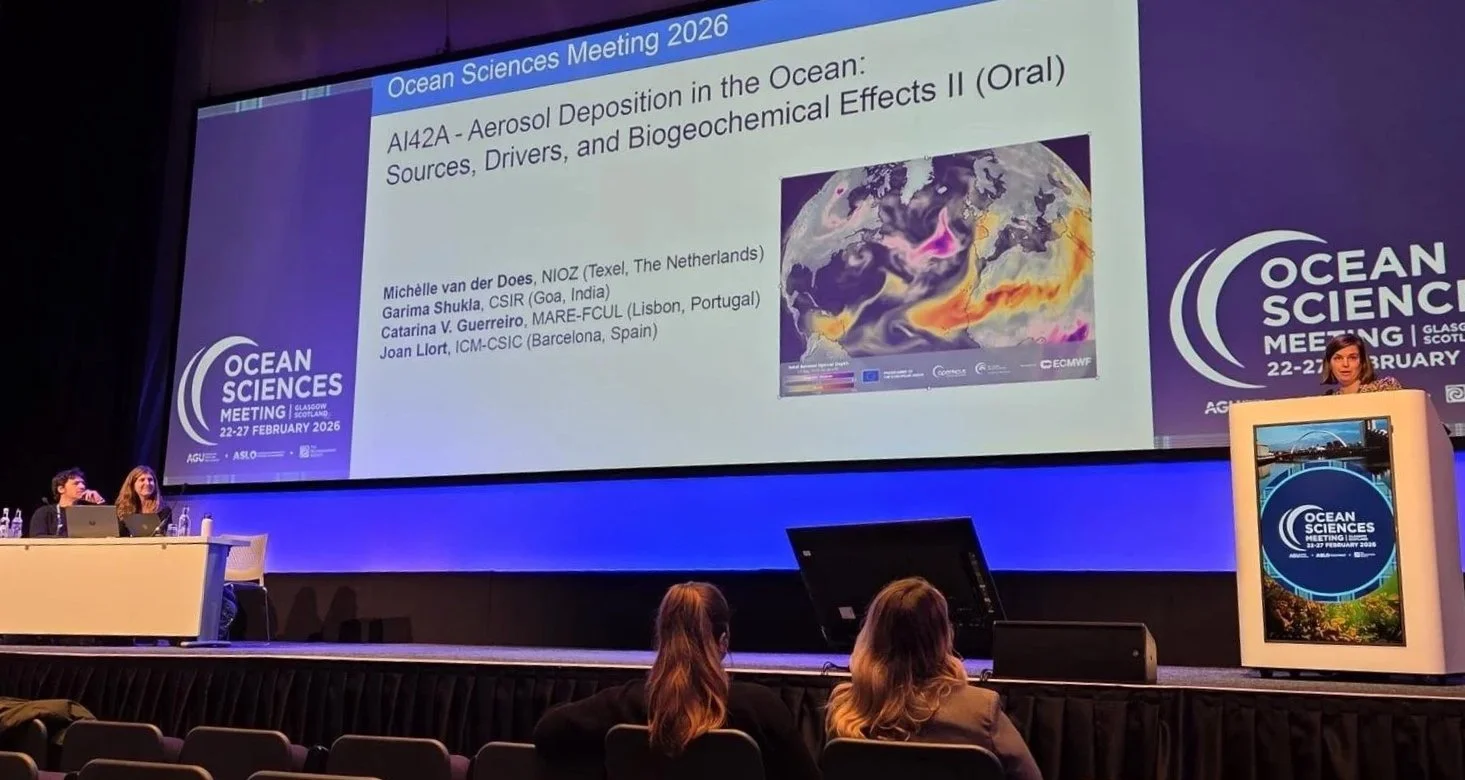
The four organisers of the OSM 2026 SOLAS session: “Aerosol Deposition in the Ocean: Sources, Drivers and Biogeochemical Effects”. From left to right: Primary Chair Michèle van der Does (NIOZ), and co-chairs Garima Shukla (CSIR), Joan Llort (BSC) and Catarina V. Guerreiro (Ciências Ulisboa).
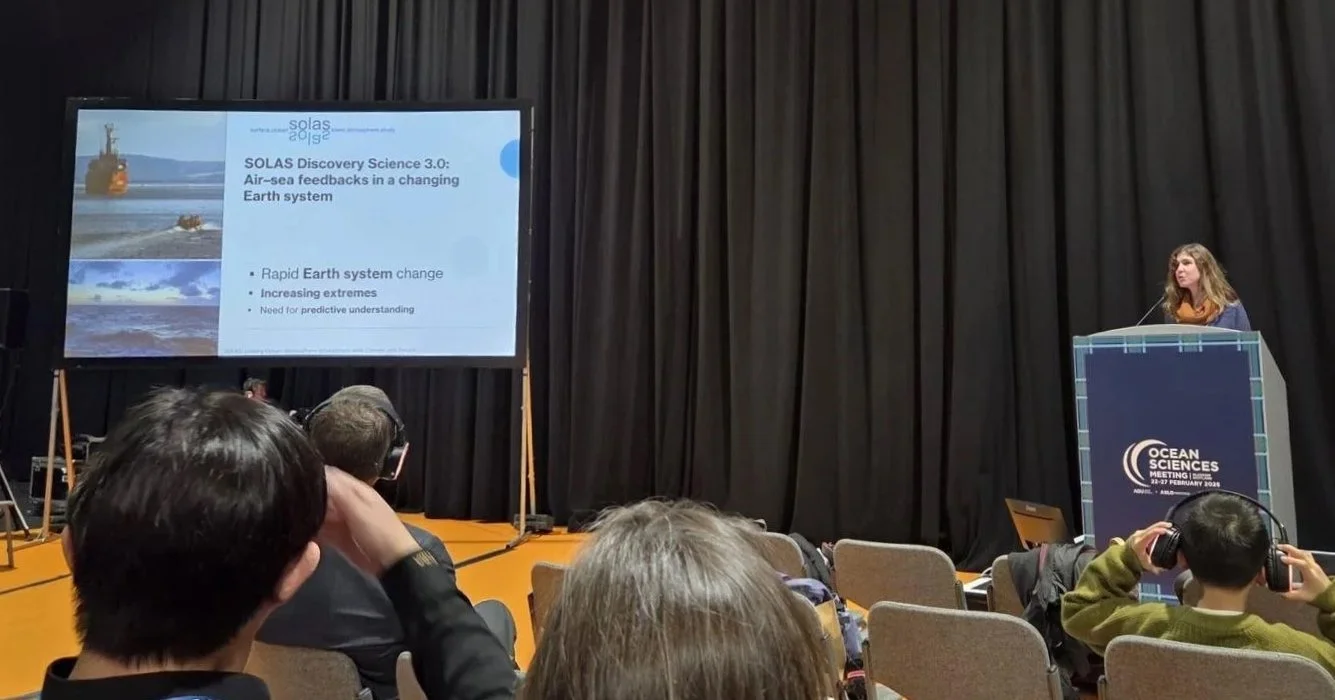
Catarina V. Guerreiro presenting the Discovery Science framework of the new SOLAS Scientific Plan 3.0, recently submitted to SCOR, an organisation aimed at promoting cooperation within the international ocean science community to achieve goals shared by scientists of the global community (photo credits: Jan-Berend Stuut).
CONVENING AI42A: AEROSOL DEPOSITION IN THE OCEAN
During OSM 2026, Catarina co-convened the session: “Aerosol Deposition in the Ocean: Sources, Drivers and Biogeochemical Effects” together with Michèle van der Does (NIOZ), Garima Shukla (CSIR) and Joan Llort (ICM-CSIC). The session addressed the full land–atmosphere–ocean continuum, including:
Emission and long-range transport of mineral dust and wildfire aerosols
Atmospheric processing and nutrient solubility
Wet versus dry deposition pathways
Fertilisation, toxicity and ecosystem restructuring
Implications for productivity and carbon export
A recurring theme across presentations was that aerosol impacts are fundamentally context-dependent, where hydrographic structure, ecosystem state and atmospheric chemistry jointly determine ecological outcomes. The diversity of approaches — spanning in situ observations, laboratory experiments, remote sensing, modelling and paleo-reconstructions — reinforced that aerosol–ocean science absolutely requires sustained interdisciplinary collaboration.
NEW SOUTHERN ATLANTIC DATA: EXPANDING THE HEMISPHERIC PERSPECTIVE
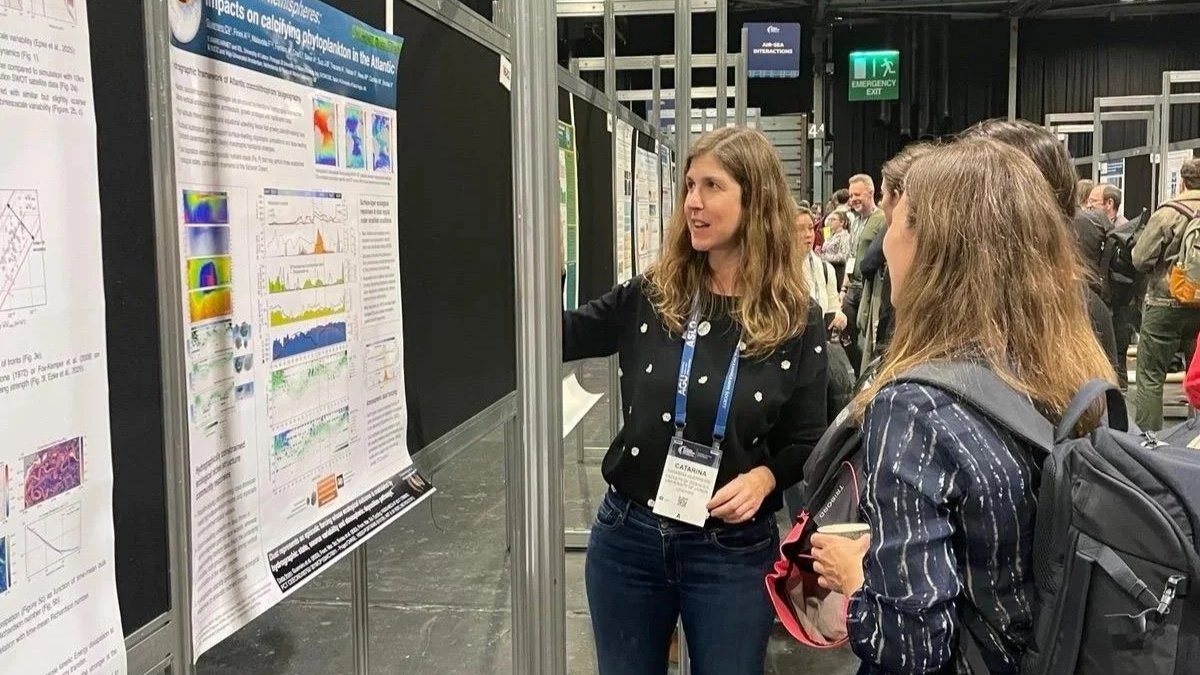
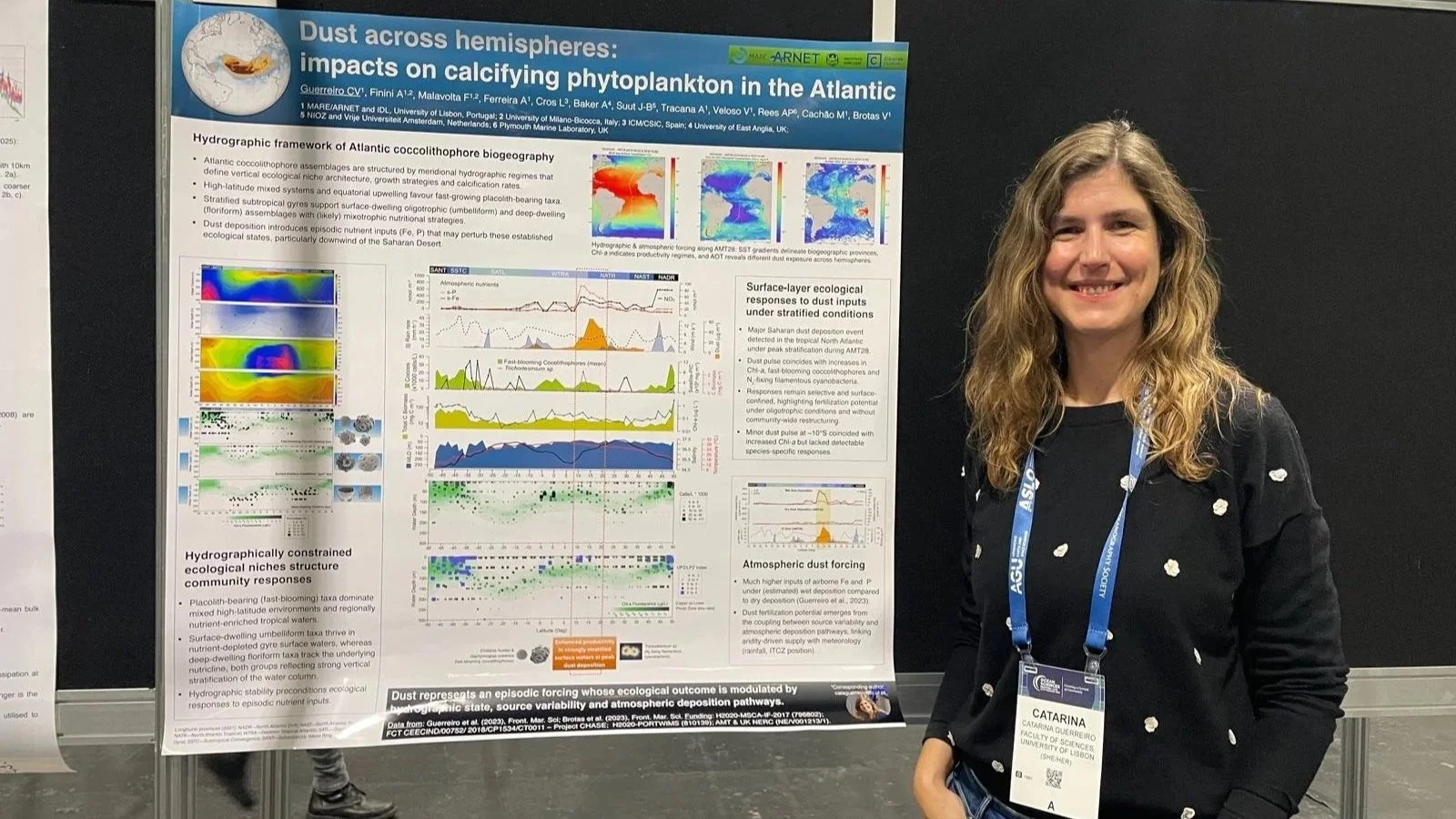
In the poster session, we presented new results examining links between dust deposition and calcifying phytoplankton communities across contrasting Atlantic regimes. While the tropical North Atlantic has been comparatively well studied in the context of Saharan dust fertilisation, the South Atlantic remains less documented. The new southern hemisphere datasets presented at OSM 2026 provide valuable comparative insights into how hydrographic structure modulates ecological responses to episodic atmospheric inputs, the latter being far more noticeable in the tropical North Atlantic – downwind of the largest desert dust sources on a global scale.
These southern hemisphere data were generated within two collaborative MSc projects with the University of Milano-Bicocca (Italy):
Alessia Finini, now a PhD student at the University of Genoa working on seaweed dynamics and cultivation for the restoration and regeneration of the Mediterranean Sea.
Federico Malavolta, now a PhD student in Marine Sciences at Ciências Ulisboa investigating Saharan and Namibian dust impacts on coccolithophores across the Eastern Atlantic, based on samples and data collected during the Ocean ICU marine expedition.
Their work significantly expanded the hemispheric scope of the AMT28 dataset and strengthened comparative analyses across Atlantic biogeographic provinces. The progression from MSc projects to ongoing PhD research also highlights the strong link between training and scientific advancement within CHASE.
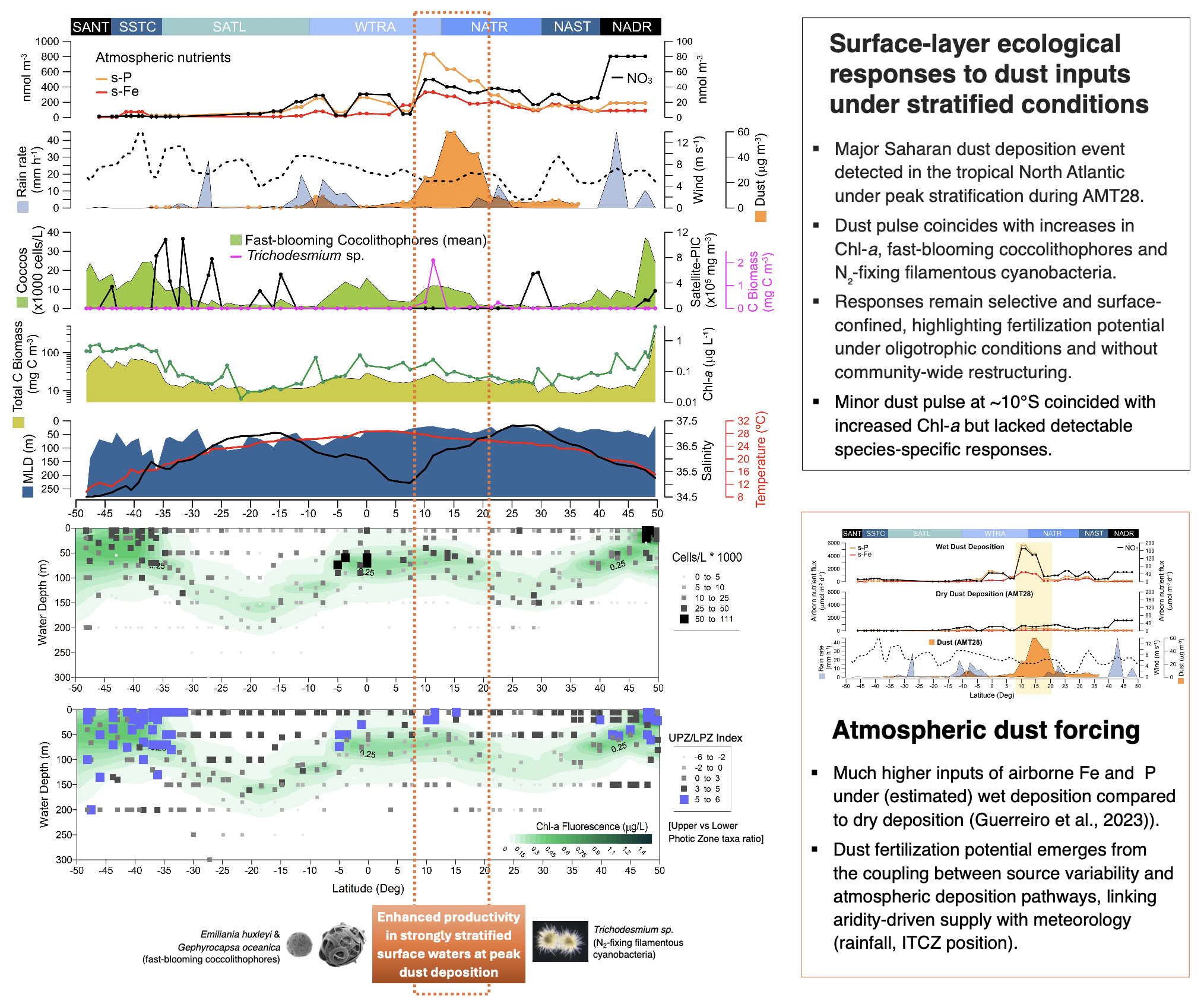
The main highlights from our poster titled: “Dust Across Hemispheres: Impacts on Calcifying Phytoplankton in the Atlantic”, by Catarina V. Guerreiro, Alessia Finini, Federico Malavolta, Afonso Ferreira, Lluisa Cros, Alex Baker, Jan-Berend Stuut, Andreia Tracana, Vera Veloso, Andrew P. Rees, Mário A. P. Cachão, and Vanda Brotas.
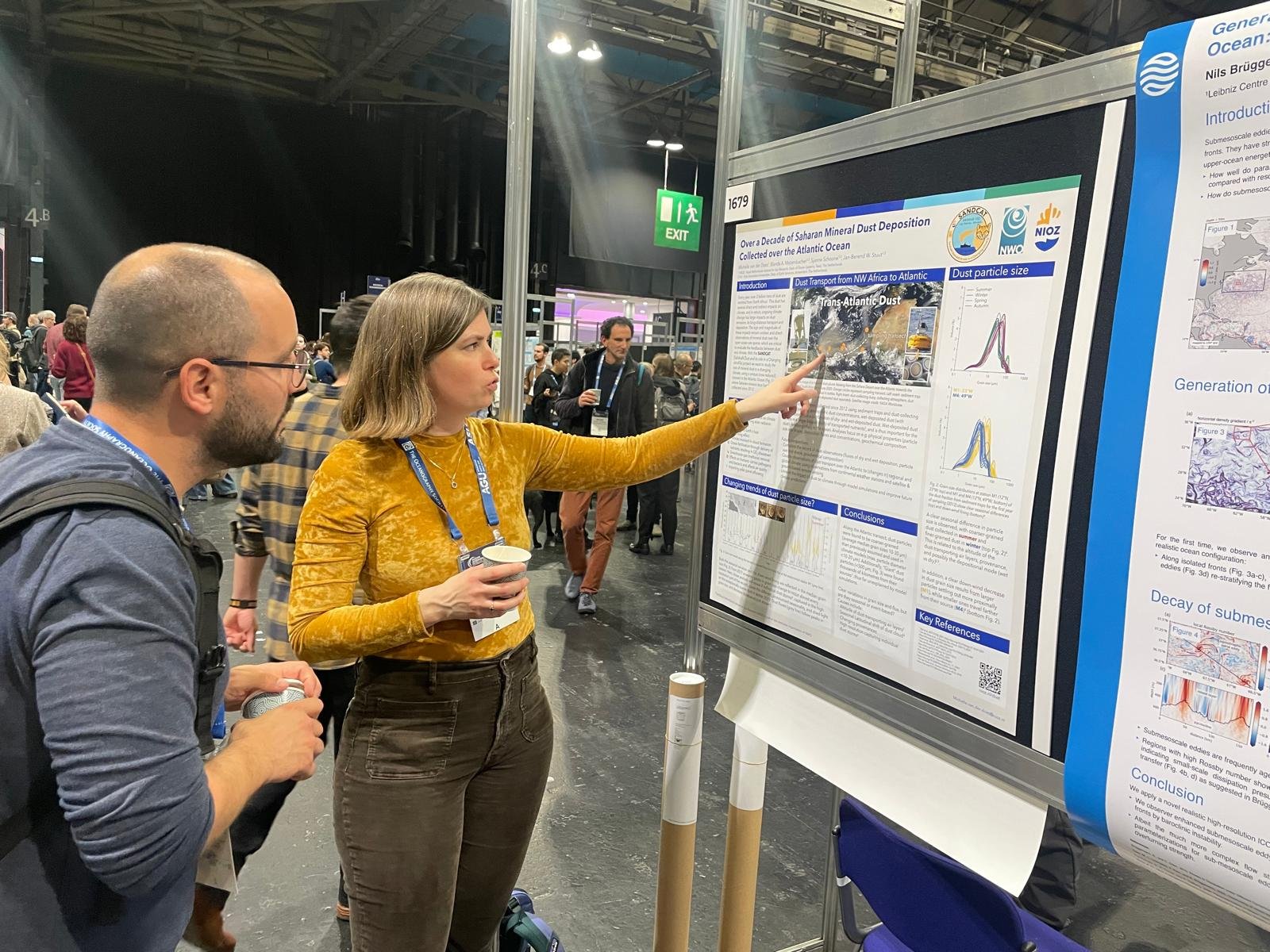
Other exciting research presented during our session — stemming from ongoing collaborations with NIOZ, IOCAG and IPMA/CCMAR — further expanded the discussion on aerosol–ocean interactions. These included the work led by Aja Trebec, examining heterotrophic bacteria and phytoplankton responses to dry and wet Saharan and Namibian dust deposition in the subtropical and tropical Eastern Atlantic, in the framework of Horizon Europe Ocean ICU; Jan-Berend Stuut, presenting ongoing efforts to monitor present-day Saharan dust above the ocean surface, and showing some of the most striking Saharan dust plume events crossing the Atlantic in recent years; and Lívia Gebara, assessing the impact of wildfires on primary production along the Western Iberian Margin by combining chemical proxies with remote sensing techniques. Together, these studies illustrate the breadth of approaches currently being applied to understand how atmospheric inputs influence marine ecosystems across regions and timescales.
STRATEGIC COHERENCE ACROSS SCALES
From contributing to the SOLAS strategic agenda, to coordinating interdisciplinary discussions, to presenting hemispheric plankton datasets, a coherent message emerged at OSM 2026: understanding climate-driven change requires simultaneous consideration of atmospheric inputs, ocean structure and biological dynamics. Aerosol research sits precisely at this intersection. Expanding geographic representation — particularly in under-sampled southern systems — and strengthening mechanistic understanding under increasing extremes remain key priorities moving forward.
A BRIEF SCOTTISH INTERLUDE
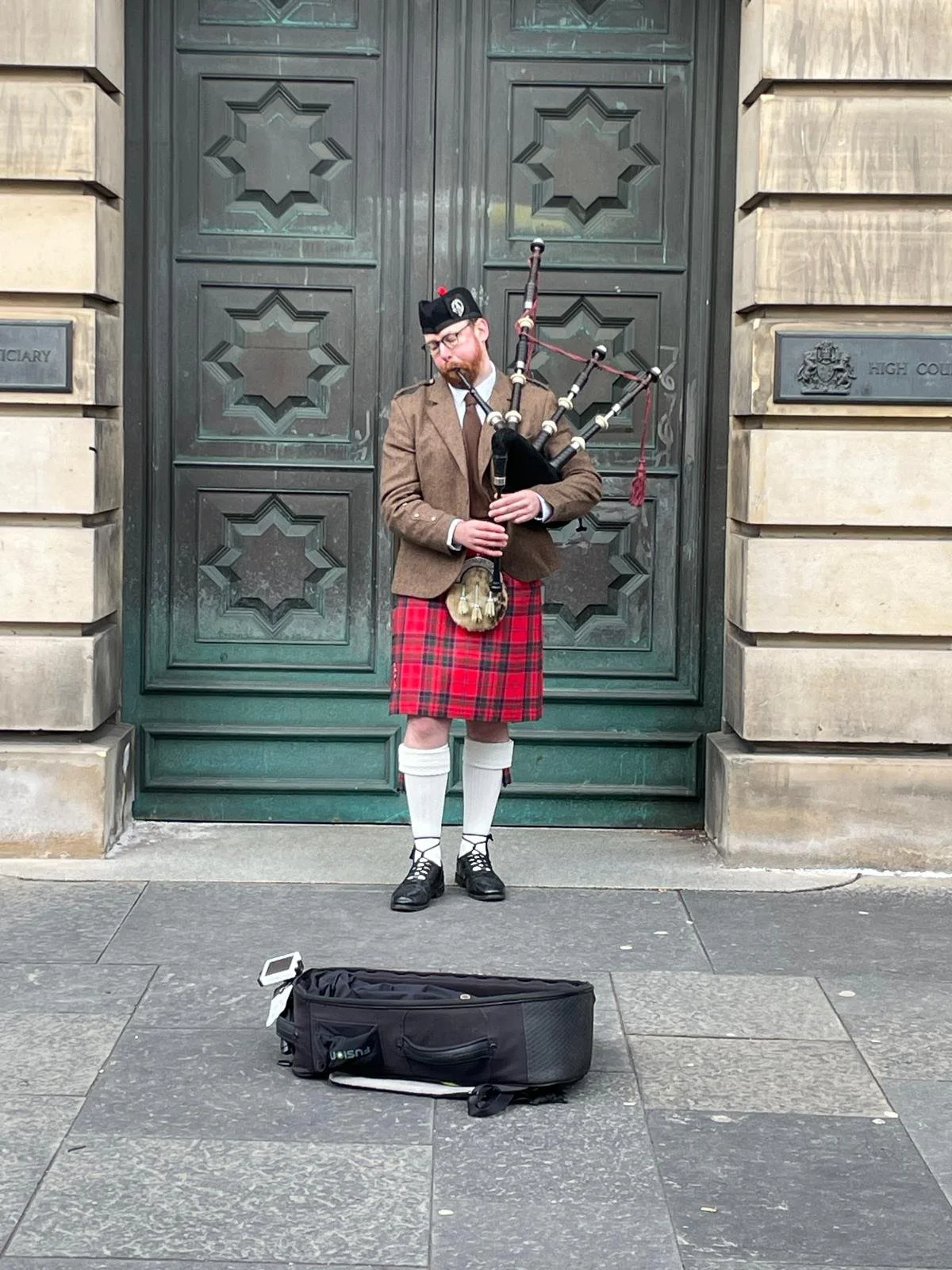
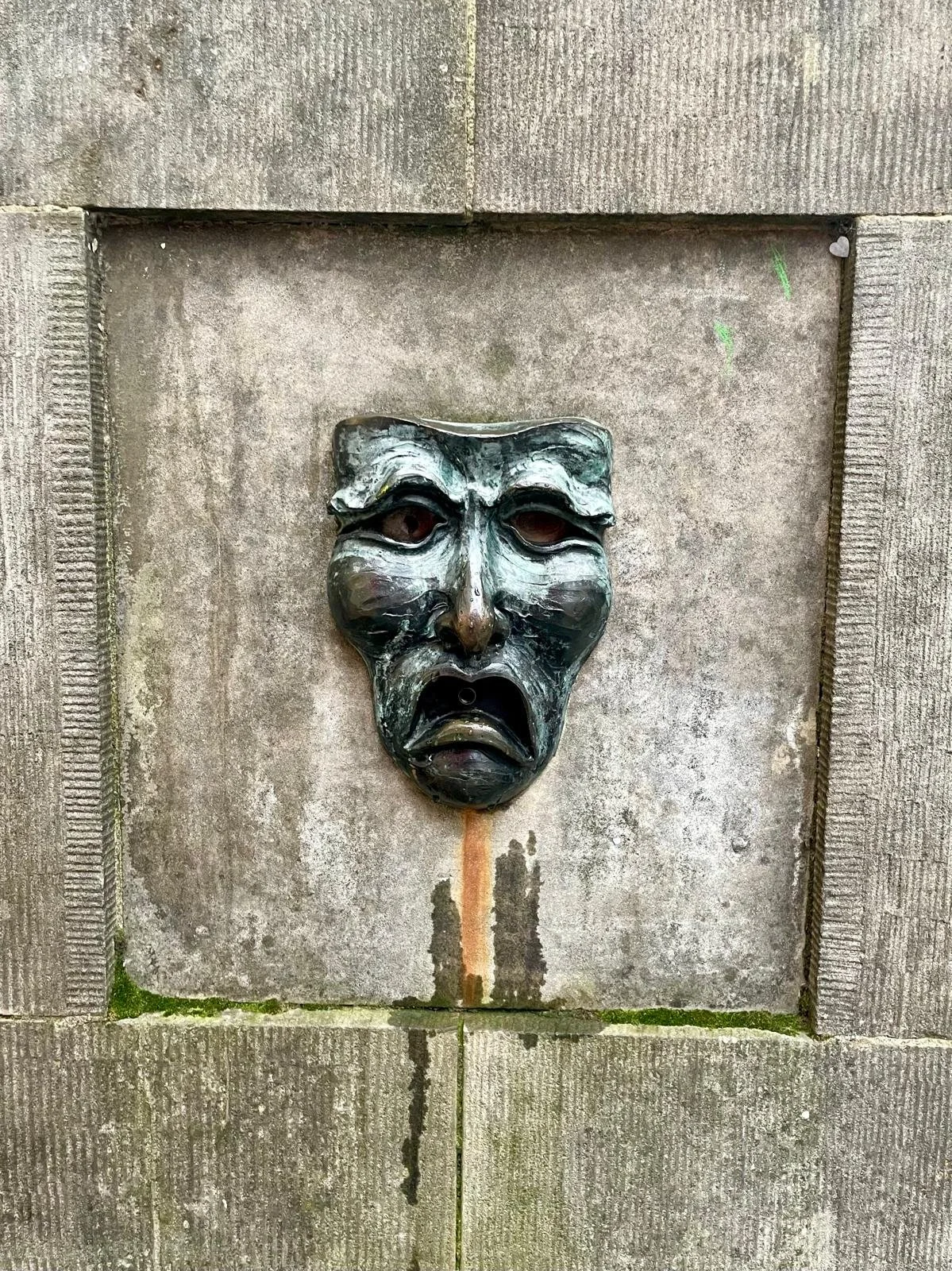
Beyond the conference programme and the single opportunity to meet old friends and colleagues from all around the world, Scotland offered a short but welcome pause. A weekend in Edinburgh — winter light on sandstone buildings, rain-polished streets and views toward the North Sea — provided space to reflect after days of intense scientific exchange. OSM 2026 reinforced the importance of interdisciplinary collaboration, hemispheric balance in datasets and sustained dialogue across atmospheric and marine sciences. For CHASE, it marked another step in connecting strategic vision with new Atlantic evidence.
Now…. back to manuscripts, proposals, students’ supervision…— and the next meridional ocean transect :)