On 21–22 May, CHASE has participated in the Oceanography Meeting 2026 in Sesimbra — two very intense and stimulating days of science, discussion and exchange across different generations of the Portuguese oceanographic community.
Organized by the Portuguese Association of Oceanography (APOCEAN), the meeting brought together researchers, technicians and students working across the many dimensions of ocean science, from physical, chemical and biological oceanography to paleoceanography, operational oceanography, paleoclimate studies. Since its establishment in 2013, APOCEAN has played an important role in promoting interdisciplinarity, scientific exchange and internationalization within the Portuguese oceanographic community, while also fostering citizen science and scientific outreach as central approaches to strengthen the connection between society and the ocean.
During the meeting, Catarina V. Guerreiro (MARE Lisboa & IDL-RG2) presented two studies focused on atmosphere–ocean interactions and the role of plankton in marine biogeochemical cycles. The oral presentation explored the impacts of atmospheric dust deposition on ocean productivity and coccolithophore communities across the entire Atlantic Ocean, based on observations from the Atlantic Meridional Transect (AMT28).

These results are part of an ongoing collaboration between MARE-Ulisboa and IDL at CIÊNCIAS Ulisboa, together with the Plymouth Marine Laboratory, University of East Anglia and Royal Netherlands Institute for Sea Research, some of which have already been published/submitted (Guerreiro et al., 2023; Brotas et al., 2023; Finini et al. submitted). Image credits: Lélia Matos.
Almost symbolically, the meeting coincided with an intense heatwave and Saharan dust intrusion affecting Portugal. While we discussed the impacts of atmospheric dust on marine ecosystems and the carbon cycle inside the conference room, the sky outside provided a visible reminder of the atmosphere–ocean interactions we study across the Atlantic and the Iberian Margin.
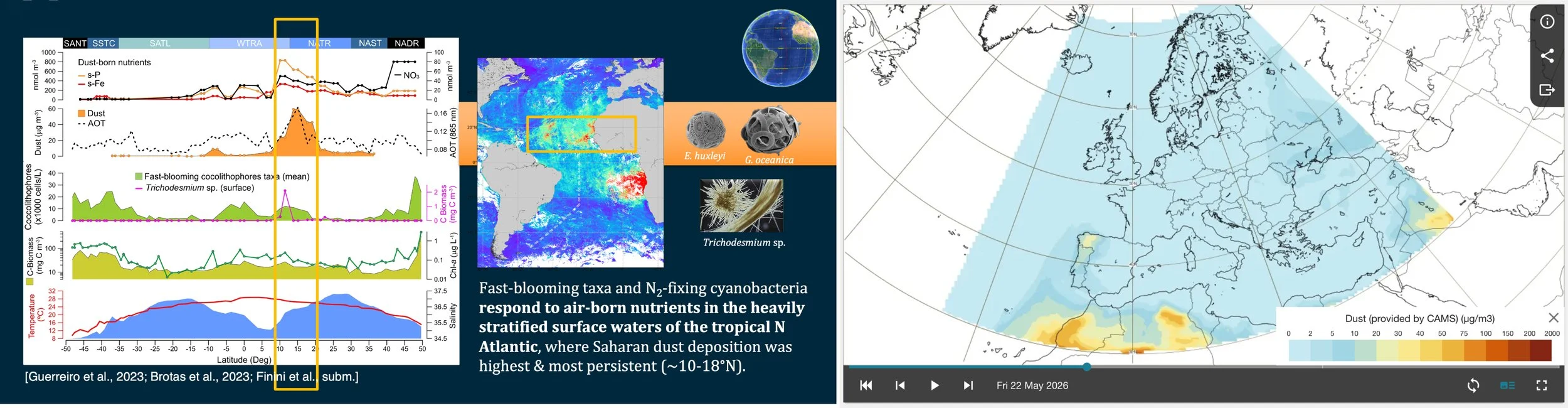
On the left: Results from our dust-related research showing how episodic atmospheric deposition events can modulate productivity and favor specific phytoplankton groups in oligotrophic open-ocean regions, particularly in the tropical North Atlantic, where dust inputs are relatively high and persistent due to the proximity of the Sahara Desert. On the right: “snapshot” of CAMS European daily aggregated aerosol forecast showing a notable increase in dust atmospheric concentrations in Portugal during the Oceanography Meeting, associated to the poleward intrusion of a warm and dusty air mass originating from Africa.
A scientific poster was also presented to show the preliminary results from the ocean alkalinity enhancement (OAE) microcosm experiment that we implemented at CIÊNCIAS ULisboa exactly one year ago, as part of the international project OAEPIIP. OAEPIIP is the first internationally coordinated effort to assess pelagic ecosystem responses to OAE, an emergent marine carbon dioxide removal (mCDR) approach aimed at increasing the ocean’s capacity to absorb atmospheric CO₂.
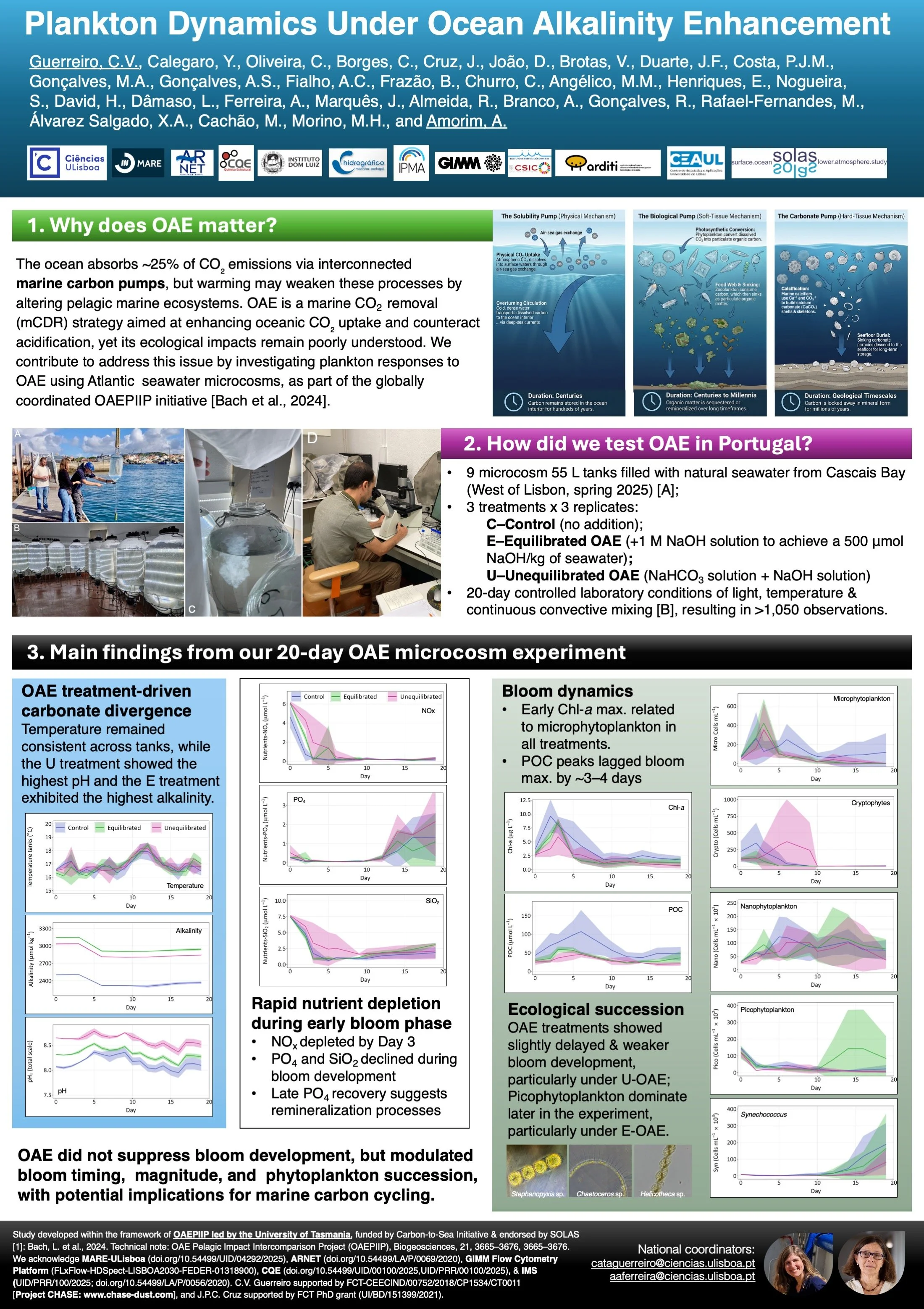
Within the framework of the OAE Pelagic Impact Intercomparison Project (OAEPIIP) — the first internationally coordinated effort to assess pelagic ecosystem responses to OAE — we presented preliminary results from NE Atlantic coastal microcosms, showing that OAE influenced bloom expression and induced subtle shifts in microbial community structure, although without evidence of abrupt ecological reorganization over short experimental timescales.
Beyond our own contributions, the meeting showcased the breadth of atmosphere–ocean and climate-related research currently being developed across different generations of researchers at CIÊNCIAS ULisboa. Particularly worth highlighting was the presentation by Maria Cadima (MARE Lisboa), who received the APOCEAN Student Award, highlighting the strong quantitative and climate-oriented research now emerging from younger generations of oceanographers at our faculty.
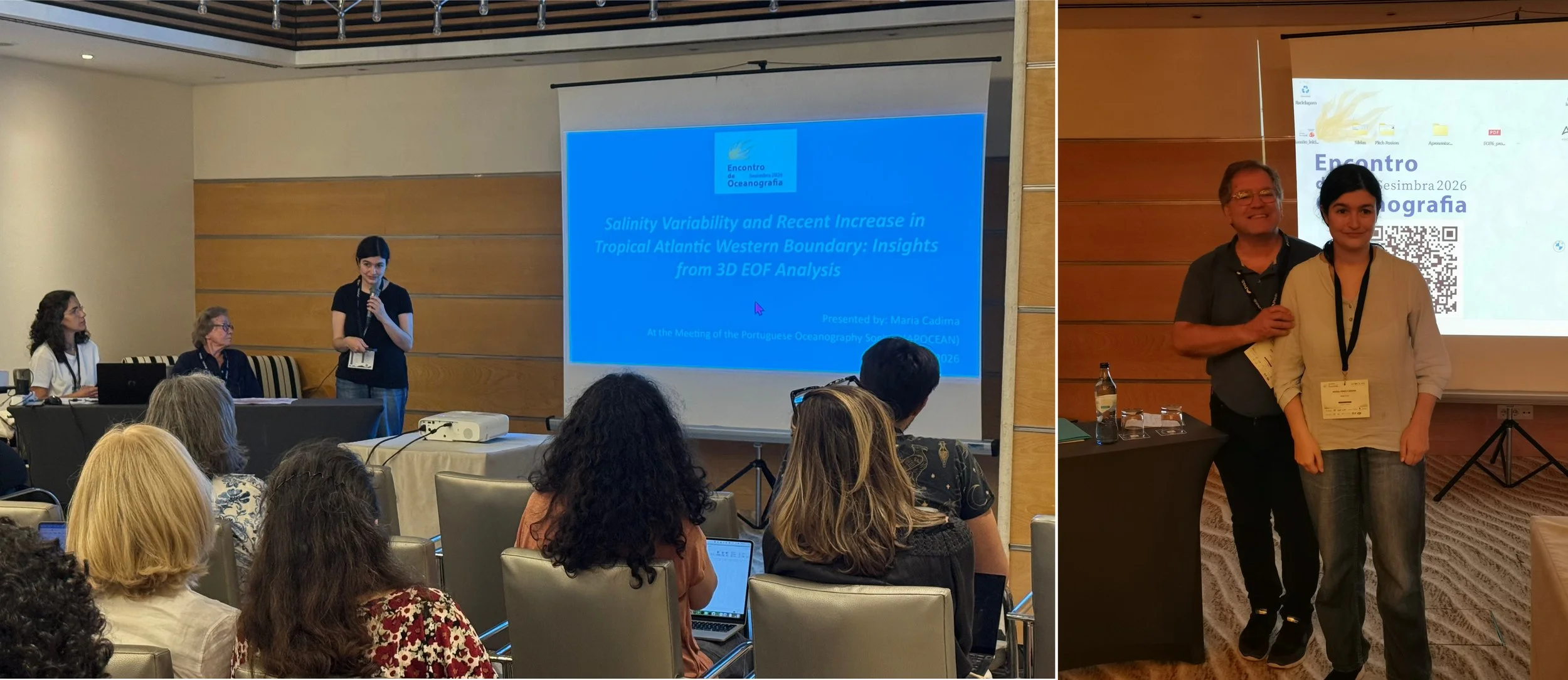
On the left: Maria Cadima presenting her work on the mechanisms behind the recent salinity increase in the western tropical Atlantic and the potential role of large-scale circulation associated with the Atlantic Meridional Overturning Circulation (AMOC). Using a 3D EOF analysis applied to 30 years of ocean reanalysis data, the study demonstrated the importance of subsurface advective processes linked to the North Brazil Undercurrent in driving decadal salinity variability in the region. On the right: Maria receiving the best presentation award by APOCEAN’s President Miguel Santos (IPMA). Image credits: APOCEAN.
It was also very special to attend the presentation by Professor Fátima Sousa (MARE and CIÊNCIAS ULisboa), who was honored during the meeting as a co-founder of APOCEAN. Her work discussed recent thermohaline changes in Eastern North Atlantic Central Water (ENACW) in the NE Atlantic and the possibility that these changes reflect larger-scale shifts in North Atlantic circulation. It was particularly meaningful to see these emerging research themes discussed alongside the work of Fátima, whose contributions have played an important role in shaping Portuguese oceanography and inspiring younger generations of researchers.
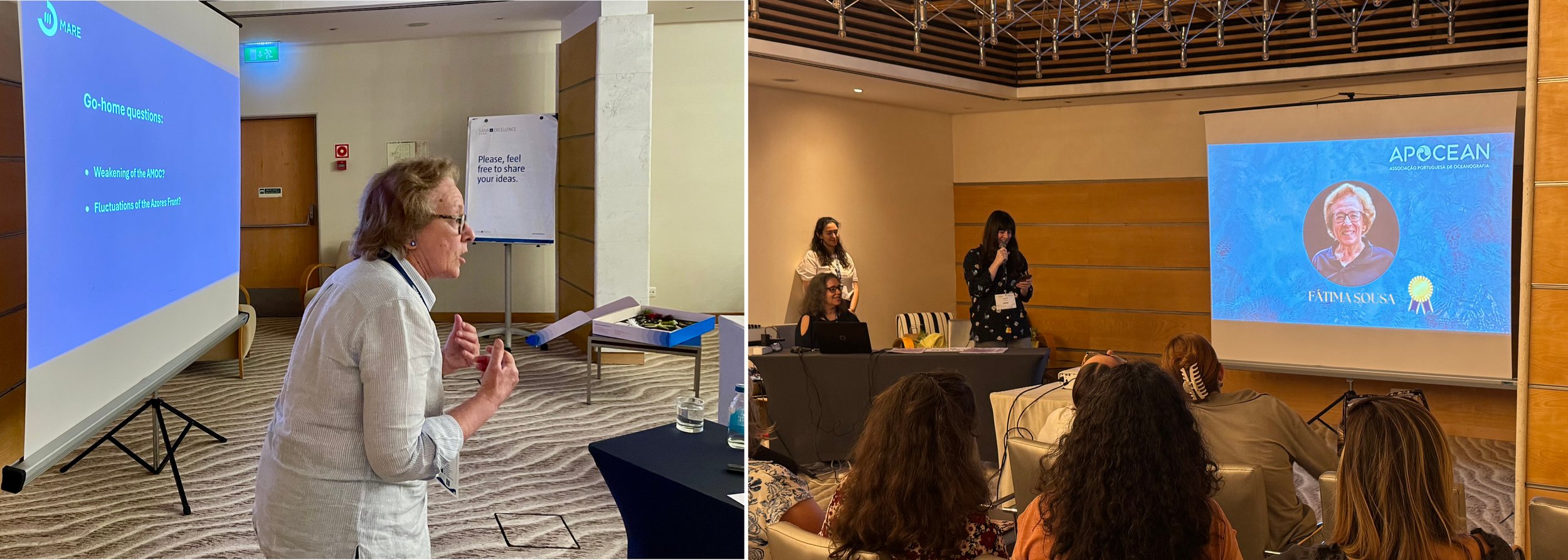
On the left: Fátima Sousa’s work on recent thermohaline changes in Eastern North Atlantic Central Water (ENACW) in the NE Atlantic and the possibility that these changes reflect larger-scale shifts in North Atlantic circulation — a particularly relevant topic in the current context of AMOC variability and climate change. On the right: Fátima being honored as a co-founder of APOCEAN. Image credits: Catarina V. Guerreiro and APOCEAN.
Two other very interesting contributions came from young researchers Beatriz Biguino (MARE Lisboa) and Ricardo Fernandes (IDL-RG1). Beatriz presented her PhD research, which she successfully defended in January 2026, using the Delft3D modelling suite to investigate how climate change may affect temperature and salinity in the Sado Estuary.
Ricardo presented preliminary results from his ongoing MSc studies exploring the potential impacts of floating offshore wind farms on atmosphere–ocean interactions along the western Iberian margin. Using regional WRF simulations, the work showed that offshore wind farms may significantly alter wind patterns, coastal upwelling intensity and, consequently, regional biological productivity.
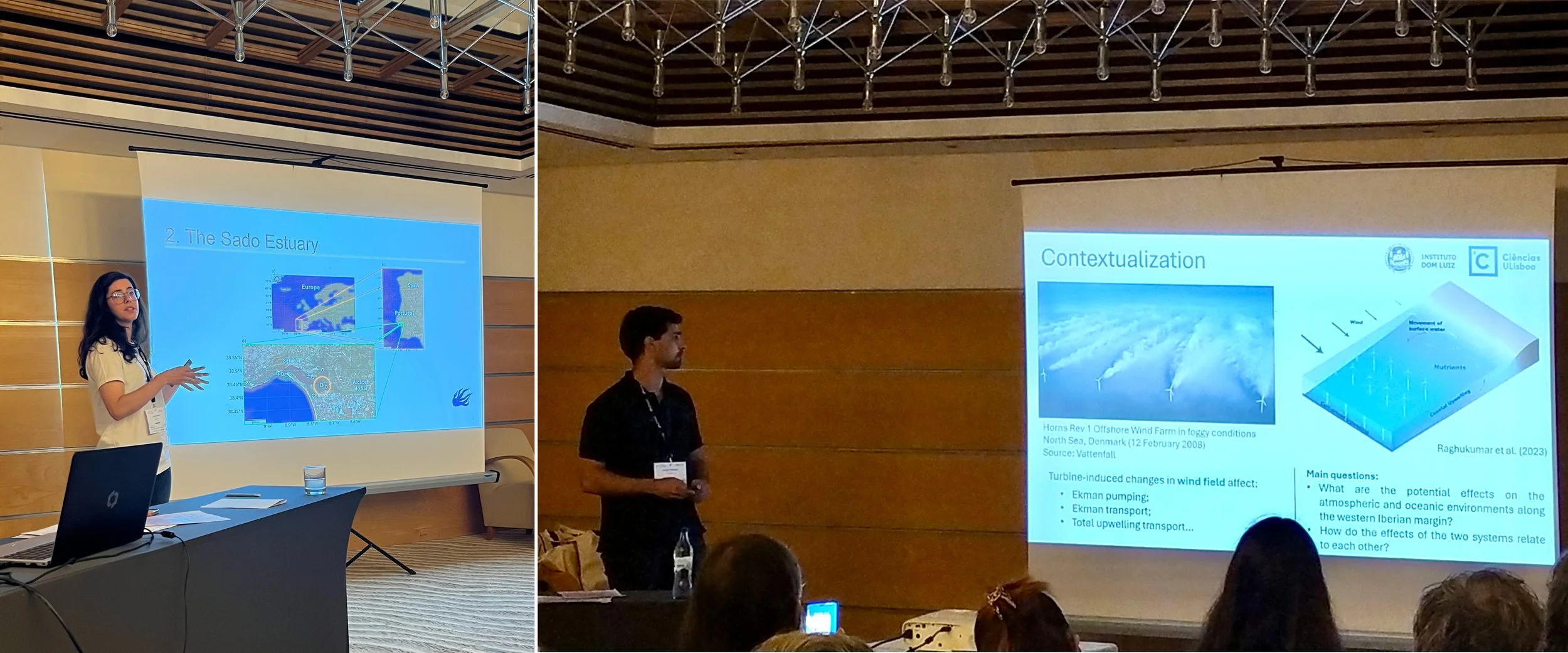
Young researchers Beatriz Biguino (left) and Ricardo Fernandes (right) presenting their research at the Oceanography Meeting 2026. Combining historical simulations with future projections under different SSP scenarios, Beatriz highlighted the sensitivity of estuarine systems to both climatic and hydrological changes, reinforcing the importance of regional-scale climate adaptation studies in coastal environments. It was particularly interesting to see Ricardo’s results showing how infrastructures associated with the energy transition may generate relevant physical and biogeochemical responses in the ocean, reinforcing the need for integrated atmosphere–ocean–ecosystem approaches. Image credits: APOCEAN.
Beyond the excellent opportunity to reconnect with old friends and colleagues, the meeting also created a very inspiring environment for building new collaborations and discussing future synergies between national research groups and institutions. The meeting also illustrated the importance of maintaining strong bridges between senior researchers, early-career scientists and students working across different branches of oceanography.
Many congratulations to the organizing committee and APOCEAN for such a successful meeting — scientifically stimulating, interdisciplinary and marked by a warm and open community spirit.
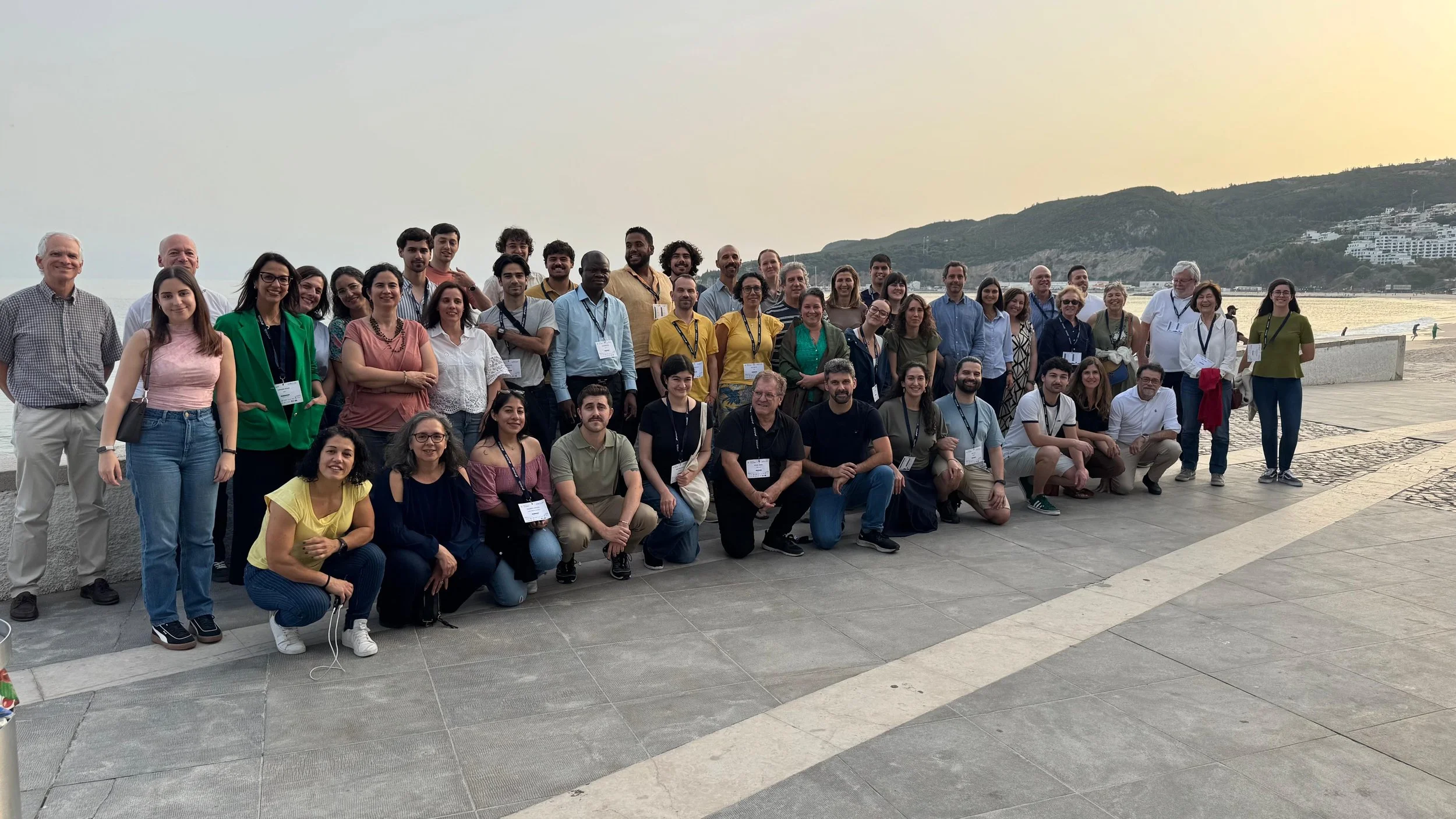
The group photo at the end of the day, taken under a yellowish sky shaped by a Saharan dust intrusion, captured particularly well the spirit of the meeting: a diverse, interdisciplinary and highly motivated scientific community. Image credits: APOCEAN.