After several years of discussion, writing, consultation and collective work across the international SOLAS community, the SOLAS 3.0 Science Plan has now been officially launched. The new plan sets the scientific direction of the Surface Ocean - Lower Atmosphere Study (SOLAS) for the coming decade, at a time when understanding interactions between the ocean and atmosphere — and how they are being altered by climate and environmental change — matters more than ever.
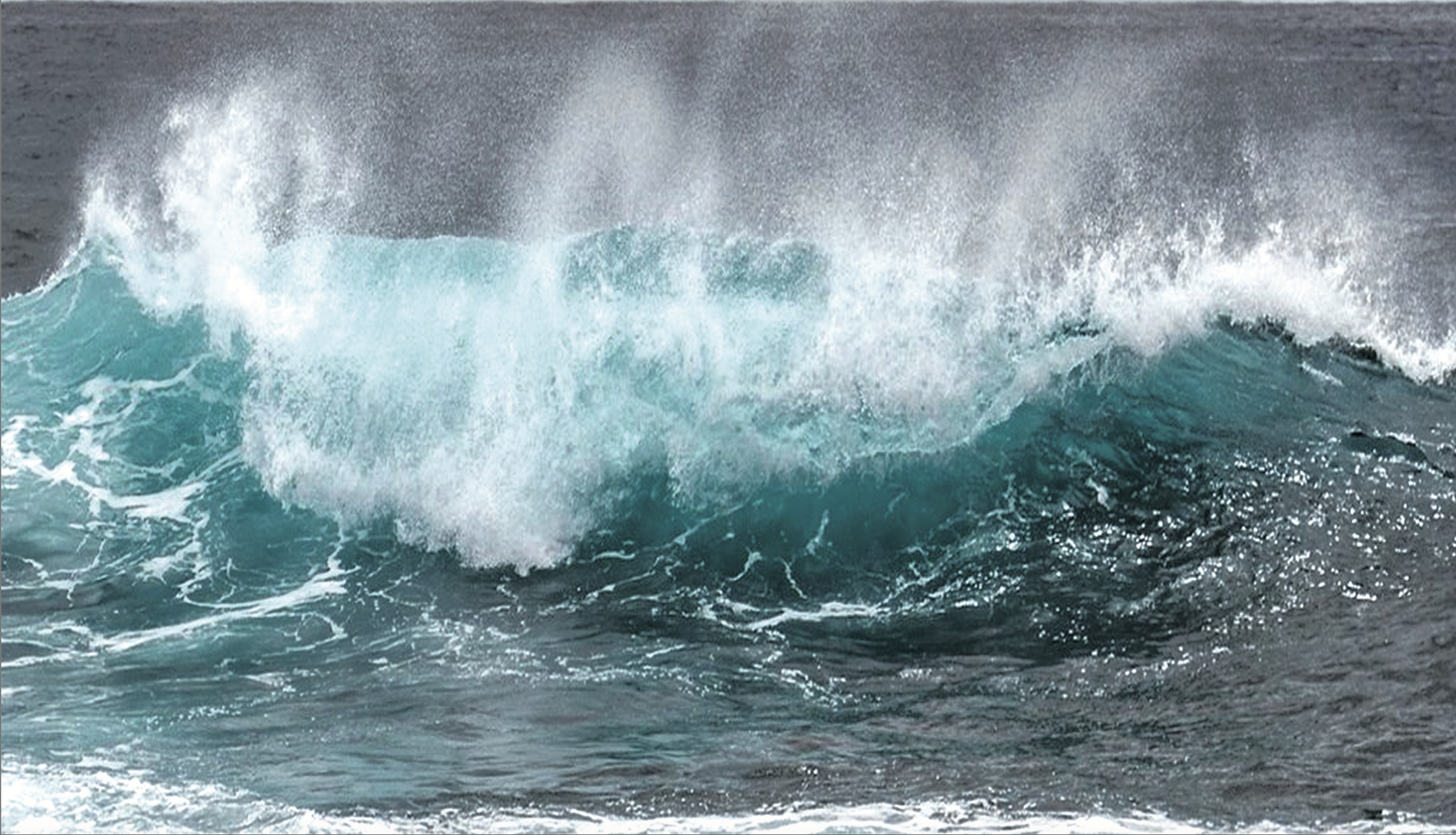
Cover image of the SOLAS 3.0 Science Plan (2026–2035), capturing the dynamic ocean–atmosphere interface at the heart of SOLAS science.
SOLAS 3.0 is organised around three interconnected components: Discovery Science, Science Towards Solutions, and Scientific Community and Skill Development. The Discovery Science component addresses some of the fundamental questions that will drive SOLAS research over the next decade: how exchanges of gases, particles, energy and momentum across the ocean–atmosphere interface are controlled; how physical, chemical and biological processes interact across spatial and temporal scales; and how these interactions influence, and respond to, a rapidly changing Earth system. Importantly, the new plan emphasises the need to connect observations, experiments and modelling across environments and scales, while strengthening the links between fundamental research and the major environmental challenges facing society.
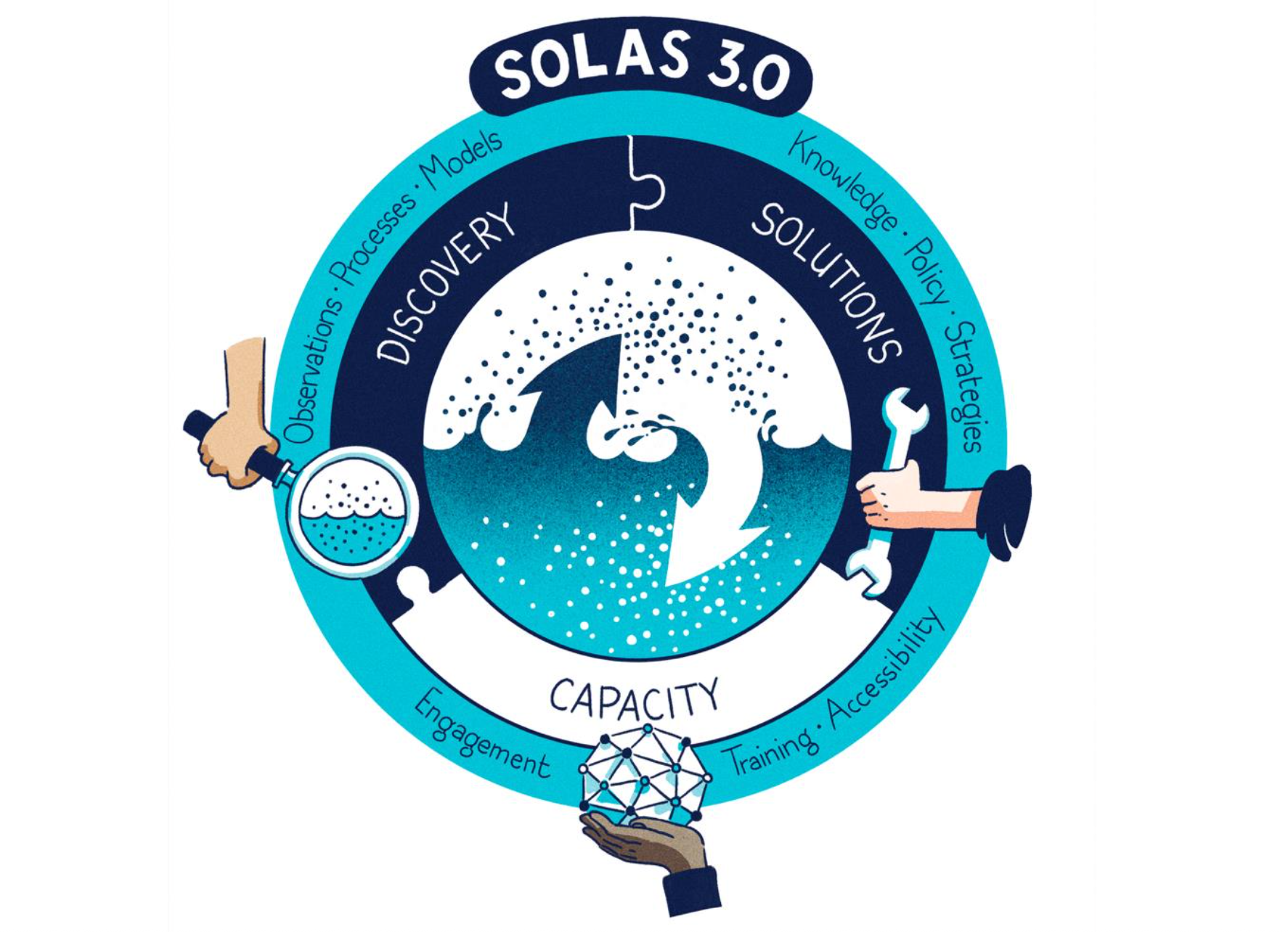
The linked components of the SOLAS 3.0 science plan: Discovery Science, Science Towards Solutions, and Scientific Community and Skill Development. Credits: Anna Arkoulaki, Lei Chen, and Charlotte Hintzman.
CHASE members Catarina Guerreiro and Jan-Berend Stuut both contributed to the development of the SOLAS 3.0 Science Plan. For Catarina, who served as Co-Coordinator of the Discovery Science component, the launch also marks the end of a rather special journey – which began with the SOLAS Scoping Workshop in Xiamen, China, followed by almost three years of discussions, workshops, writing and rewriting. Along the way came many stimulating discussions and memorable encounters around the world — from Xiamen, China, to Goa, India, the Ocean Sciences Meeting in New Orleans, USA, and Glasgow, Scotland.
Being part of this mission also offered a unique perspective on how an international scientific community discusses priorities, accommodates different perspectives, and collectively builds a research agenda for the future — while providing an opportunity to discover the SOLAS community itself: an extraordinarily diverse and generous network of scientists working across disciplines, countries and career stages.
The whole process sometimes felt like running a marathon! :-) But it was also an extraordinary opportunity to learn — scientifically and beyond —, a genuinely rewarding process, and a wonderful way to become part of this community.]
Seeing the plan finally published is therefore very satisfying. But, of course, this is only a starting point. What really matters now is the new science, collaborations, observations, experiments and ideas that will emerge from it over the next decade. And, ultimately, how we can harness science and global collaboration to better understand and respond to a rapidly changing world.
We look forward to seeing where it leads!
📘 SOLAS 3.0 Science Plan (2026–2035) – Executive Summary
🔗 Official SOLAS launch announcement – SOLAS website
Li, L., Marandino, C., Miller, W. L. (eds.). Bach, L., Dai, M., Dinasquet, J., Garçon, V., Gassó, S., Guerreiro, C., Li, L., Marandino, C., Miller, W. L., Steiner, N., Wallace, D., et al. (2026). SOLAS 3.0: 2026-2035: Science Plan and Organisation. SOLAS International Project Office, State Key Laboratory of Marine Environmental Science (Xiamen University), Xiamen, 103 pp. DOI: 10.5281/zenodo.18287483